More pages
Your Wish for Ice, Granted.
Ice Rink Genie makes local ice easy to find, understand, and trust. Ice time is fragmented across rink websites, town calendars, registration systems, and word of mouth, and much of it is seasonal, oddly-timed, or poorly labeled. We gather it, translate it into plain language, and keep it current.
Where is the ice? Every rink in the region, with its operating status and season, because a rink that exists isn't the same as a rink with ice today.
What kind of session is it? Public skate, stick & puck, Learn to Skate, skills, clinics, with who can attend, what's allowed, and what to bring.
Is it the right ice? Skating comes first. We label the expected level of every session so parents can pick the ice their skater actually needs: we classify the session, never the player.
How current is it? Every listing shows its source and when we last checked it. When we don't know something, we say “unknown” rather than guess.
Why skating comes first
It all starts with skating. Programs like Learn to Skate USA's leveled curriculum build it step by step, one skill at a time: swizzles before glides, glides before stops, stops before turns. Skip a step and the next one just gets harder. Public skating is the perfect companion to lessons like these: easy, low-pressure ice to make those same moves feel second nature.
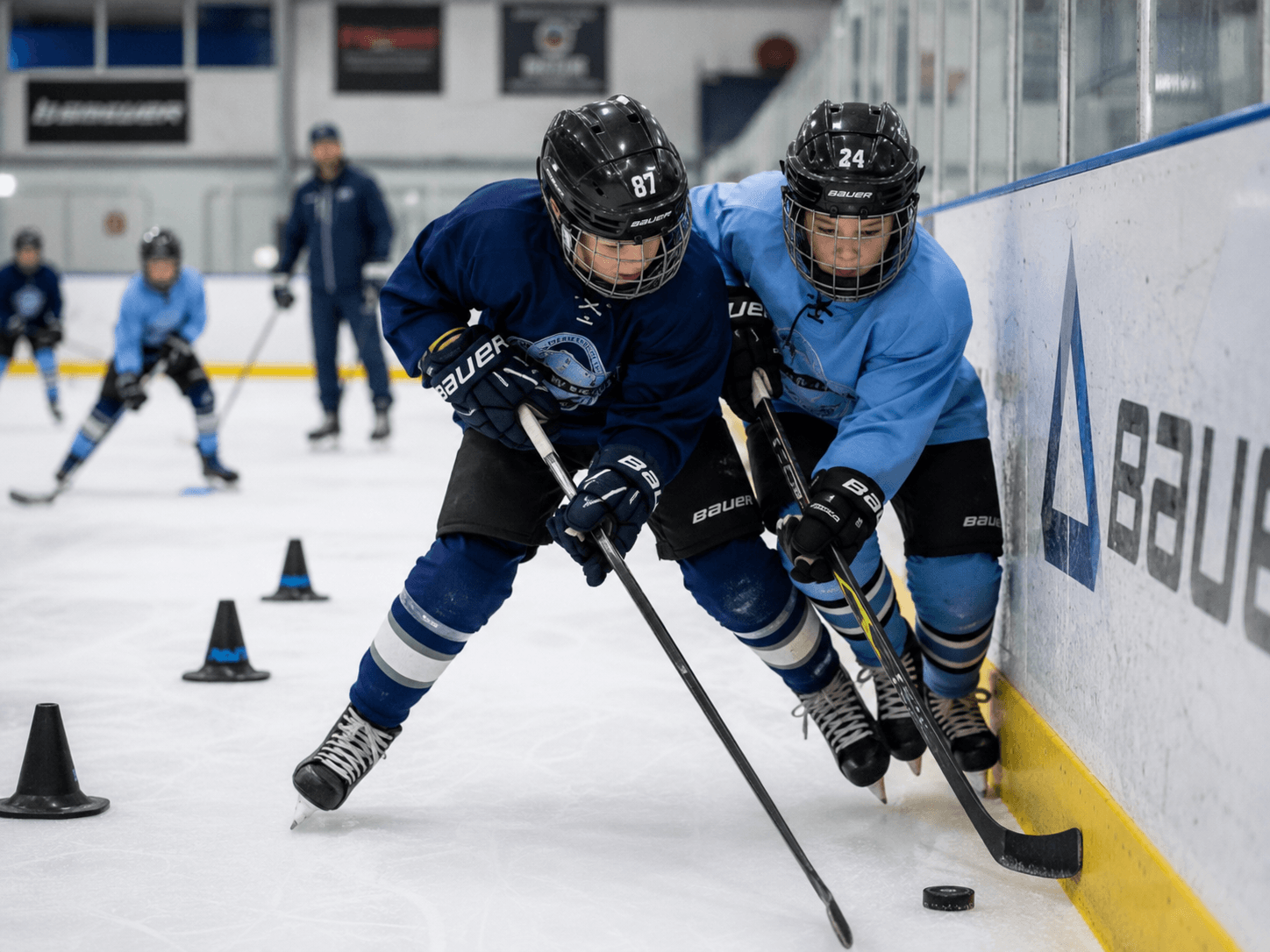
In early development, skating is nearly the whole game. A hockey skill like passing, shooting, or puck control is only as good as the skating underneath it. Hockey-specific skills sessions before skating is solid tend to burn ice time practicing on a shaky foundation, not building one. Time on basic skating, repeated often, is what everything else later depends on.
The typical path: heavy, repeated skating early, and plenty of it, before anything else. From there, Learn to Play and developmental or in-house hockey come next, paired with hockey-specific edge work as that skating foundation solidifies. It's common for a player to be sitting in a skills session when more skating lessons and practice ice would serve them better, not because of ability, but because the sequence got skipped.
Ice Rink Genie doesn't rank or evaluate players. It labels what each session actually is and who it's built for, so families can match the right kind of ice to where a skater actually is, before chasing the more advanced session.
From there, the pathway opens up fast: hockey skills sessions and clinics to sharpen specific tools, camps that pack a season's worth of reps into a few intense days, and elite or invite-only programs for players ready to be evaluated against the best around. Finding the right one at the right moment is where real progress happens: every level up is a new kind of ice to discover, and the right fit is often closer than it looks.
Session types, translated
Public Skate
What it is: Open recreational skating for everyone. No sticks or pucks. Mixed ages, skate rentals usually available.
Who it's for: Anyone, first-timers to experienced skaters. The cheapest, most available ice there is.
Confirm before going: Times change on holidays and school-vacation weeks; some rinks cap capacity.
Stick & Puck
What it is: Unstructured practice ice where sticks and pucks are allowed. Work on shooting, stickhandling, and skating with equipment. Not a game or a lesson.
Who it's for: Skaters who can already move safely on ice. Most rinks require full equipment.
Confirm before going: Age rules and equipment requirements vary by rink; some require pre-registration.
Learn to Skate
What it is: Structured group skating lessons: the foundation for everything, hockey included. Multi-week sessions with levels.
Who it's for: New skaters of any age. The single best starting point before any hockey-specific training.
Confirm before going: Registration is almost always required and sessions fill; check which level to enroll in.
Learn to Play
What it is: Introductory hockey: skating with equipment, puck skills, small games. Often includes subsidized first gear.
Who it's for: Skaters of any age who can already move independently: stop, turn, get up unaided. If skating is shaky, more Learn to Skate first is usually the better move.
Confirm before going: Age cohorts and equipment loaner availability.
Power Skating / Edge Work
What it is: Technical skating instruction for hockey players: edges, crossovers, acceleration, agility. Usually minimal puck work.
Who it's for: Players already in organized hockey who want to skate better. This is where skating speed is actually built.
Confirm before going: Intended level: some groups are for beginners, others for advanced players.
Hockey Skills / Clinics
What it is: Instructed sessions on shooting, stickhandling, or position play. Quality and focus vary widely by provider.
Who it's for: Depends entirely on the listed level; check the flame on the card. A skills clinic is not a substitute for skating ability.
Confirm before going: Skill expectations, group size, and whether the level genuinely matches your player.
Freestyle (Figure Skating)
What it is: Practice ice for figure skaters running programs and jumps. Despite the name, not hockey ice: usually no sticks or pucks.
Who it's for: Experienced figure skaters, often with coaches. Hockey players should look for 'hockey freestyle' or stick & puck instead.
Confirm before going: Whether walk-ons are allowed or club membership is required.
Invite-Only / Club Training
What it is: Evaluated or restricted development programs run by clubs and training companies.
Who it's for: Selected players. These listings are marked restricted so they never look like drop-in opportunities.
Confirm before going: Everything: access, evaluation, cost. Contact the provider.
The Genie Flame scale

Beginner
Learn to Skate and first-time programs. This is where skating ability is actually built: the foundation everything later depends on.
Foundation
Advancing core skating (stopping, turning, balance, edges) and the first hockey basics of Learn to Play.
Hockey Foundation
Skills sessions, Mites and team practice: youth hockey development for skaters ready to play, not just skate.
Advanced
Elite team play, advanced skills and specialised instruction for players pushing hockey-specific speed and skill.
Program strength
Programs are not all the same. Some run the whole development journey: learning to skate, first hockey, skills, goalie work, teams at every age. Others cover a slice of it. We rate how complete a program is, because a family choosing well matters more than sparing anyone's feelings.
Elite
A handful of programs region-wide. Deep, well-run, and competing at the highest level across most age groups.
Great
A rich program: most of the development journey, several age groups, and teams that hold their own.
Solid
A real program serving its community, with teams playing regularly.
Ratings weigh what a program actually offers, how many age groups it serves, and how its teams fare. Gems are earned against fixed bars, not handed out on a curve; most programs show no gems, which says only that we have nothing notable to report, not that the program is weak. The Flame scale rates how advanced a session is; gems rate the program behind it.
 Always CurrentWe update schedules daily
 Know Before You GoSee rules, restrictions & requirements
 Right Ice, Right FitFind what's right for your player
 Straight from the SourceEvery listing links where it came from
IceRinkGenie is an independent directory. Every listing links back to the rink or organization it came from, and they own their schedules; we just help families find them. Run a rink or program and see something wrong, or want a listing corrected or removed? Use the “Report incorrect information” link on any page, or the correction form on your organization’s page; we review every report. See our Terms and Privacy Policy.